
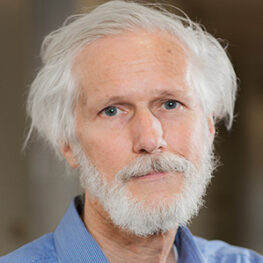
Patrick Hogan, Ph.D.
Professor
Center for Autoimmunity and Inflammation, Center for Cancer Immunotherapy
"In the last few years, physics, chemistry, and engineering have given us incisive new tools that can be applied to biological and medical problems. The challenge is to deploy these tools creatively to increase our understanding of cell biology and to discover treatments for human disease."
Overview
Patrick Hogan, Ph.D., studies cells at the nano level – seeking to understand how protein-protein interactions on the submicroscopic scale can have gargantuan impacts on human health and disease. “My laboratory is interested in the processes by which proteins interact with each other and with DNA to turn on genes in the nucleus. That’s the whole secret of how T cells work,” he said, referring to the body’s infection-fighting white blood cells. “The interactions we study are subtle but can be the key to human health and disease.” Dr. Hogan researches how calcium entry into T cells turns on the genes that are necessary to fight infections and cancers. “This flows from my earlier work in neurobiology,” he said, “where we tried to understand how pain sensory neurons are activated. That was my apprenticeship in how calcium and other ions enter cells, and how cells perceive and respond to signals.” His laboratory made a landmark discovery in 2006, when they studied a protein, ORAI1, that was mutated in two children with immune deficiency, making the children unusually susceptible to life-threatening infections. Dr. Hogan related the immune deficiency directly to calcium by showing that ORAI1 forms the pore of the calcium entry channel in T cells. “The hopeful lesson we take from these immunodeficient patients is that it may be possible to develop new therapies for transplant rejection and autoimmune disorders by targeting the calcium channel,” he said.
Featured publications
TOX and TOX2 transcription factors cooperate with NR4A transcription factors to impose CD8+ T cell exhaustion
Lab Members
 PH
PH
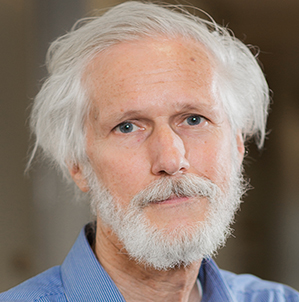
Patrick Hogan, Ph.D.
Professor Center for Autoimmunity and Inflammation, Center for Cancer Immunotherapy
From the lab
Immune cells can detect cancer
Now we can see what they see — and help
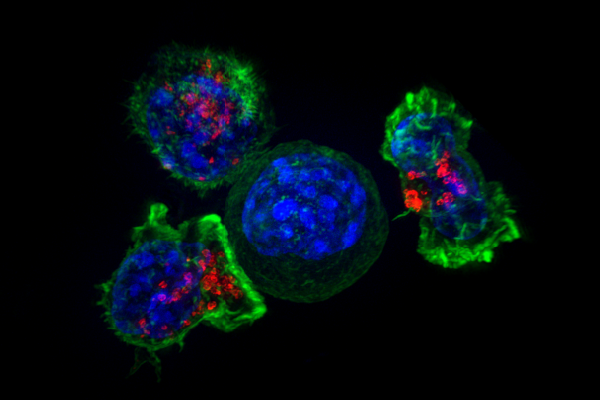
Preparing T cells for the long haul
New LJI research could keep cancer-fighting T cells from burning out before the job is done
To respond or tolerate? LJI researchers selectively block immune activation program orchestrated by the nuclear factor NFAT
LA JOLLA, CA—The immune system occasionally makes mistakes that require correction. For example, in autoimmunity, T-cells lose “immune tolerance” of
Location: