

Bjoern Peters, Ph.D.
Professor
Center for Cancer Immunotherapy, Center for Vaccine Innovation
"The challenge in bioinformatics for immunology is not to develop faster algorithms, but to accurately translate immunological questions into a computable form."
Overview
Research in the Peters lab is focused in three areas, all relating to the development of computational tools to address fundamental questions in immunology.
Starting as a PhD student in 2000, Dr. Peters has worked on the development and validation of tools to analyze and predict which parts of a pathogen, allergen or cancer cell are targeted by immune responses. Identifying these specific molecular targets of immune responses, called epitopes, recognized by diseased individuals opens a path towards the development of diagnostics, vaccines and therapeutics for that particular disease. The tools the Peters lab develops aim to reduce the experimental effort required to identify these targets; computer-based predictions allow researchers to focus on the components most likely to be recognized rather than screening thousands of molecules.
The second research area of the lab is the identification of differences between immune cells in individuals with opposite disease outcomes. Powerful experimental tools have been developed to detect differences in how cells utilize the diverse parts of the genome. The Peters lab is using these tools to characterize how immune cells from diseased individuals differ from healthy individuals. These cells are isolated using disease-specific epitopes (or reagents based on them), so our epitope-identifying algorithms directly aid our disease-focused work. This research helps us understand how the disease develops and identifies potential targets in the genome for interventions to treat or prevent the disease.
Finally, the Peters lab is deeply involved in the development of community standards for knowledge representation to promote interoperability and re-use of data. The Peters and Sette lab maintain the Immune Epitope Database (www.iedb.org), which catalogs all published experiments on immune epitope recognition. This requires transforming free text information from journal publications into a structured format, and to make the information optimally useful, connecting it with information stored elsewhere. Doing this efficiently requires a community consensus on knowledge representation. Dr. Peters’ team is contributing to such consensus building and standardization efforts through active work on scientific community initiatives such as the Ontology of Biomedical Investigations (OBI, http://obi-ontology.org/).
Featured publications
Epitope specific antibodies and T cell receptors in the immune epitope database
Predicting T cell recognition of MHC class I restricted neoepitopes
Determination of a predictive cleavage motif for eluted MHC class II ligands
Discovering transcriptional signatures of disease for diagnosis versus mechanism
Lab Members


















 BP
BP
Bjoern Peters, Ph.D.
Professor Center for Cancer Immunotherapy, Center for Vaccine Innovation







Research Projects
Allergic Diseases
Pediatric Milk Allergy: To study the frequency and phenotype of milk allergen-specific T cells in cohorts with different disease manifestations
Cancer
Immunotherapies for head and neck cancer: To develop new cancer therapies by studying how the immune system, by way of
Data Standards
HIPC Data Standards: A collaboration with various centers of the Human Immune Profiling Consortium (HIPC) to build upon the existing
Epigenetic and Transcriptomic Profile of Human Immune Cells
The lab aims to perform epigenetic and transcriptomic analyses of purified circulating immune cell types from healthy human subjects. NIH/NIAID
Human Immune Profiling Consortium
The aim of this work, in collaboration with Bjoern Peters, Ph.D., and Pandurangan Vijayanand, M.D., Ph.D., is to characterize the
SARS-COV-2
COVIC-DB: To co-run the LJI-led CoVIC database in the effort to find ideal therapeutic combinations for the novel coronavirus, the
From the lab
Vac to the future
Vaccine researchers take on the challenge of predicting B. pertussis immunization outcomes
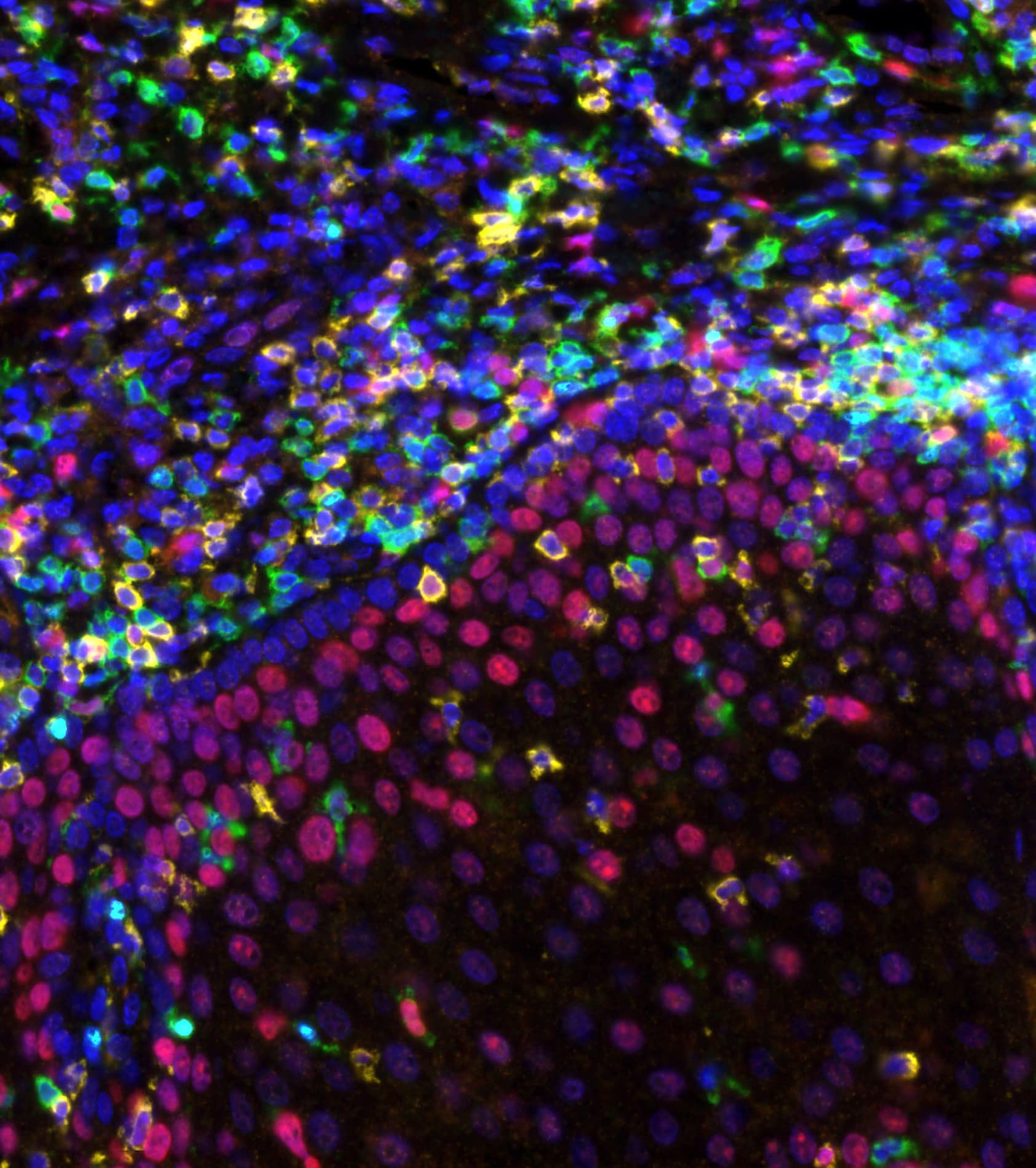
A step toward personalized immunotherapy for all
"The potential for a 'cure from within' is in every cancer patient we've looked at..."

New $17 million grant establishes LJI as global hub for immunology data curation and analysis
NIAID support opens gateway to new research into human immune responses to viruses, the development of autoimmune diseases, and more
Location: