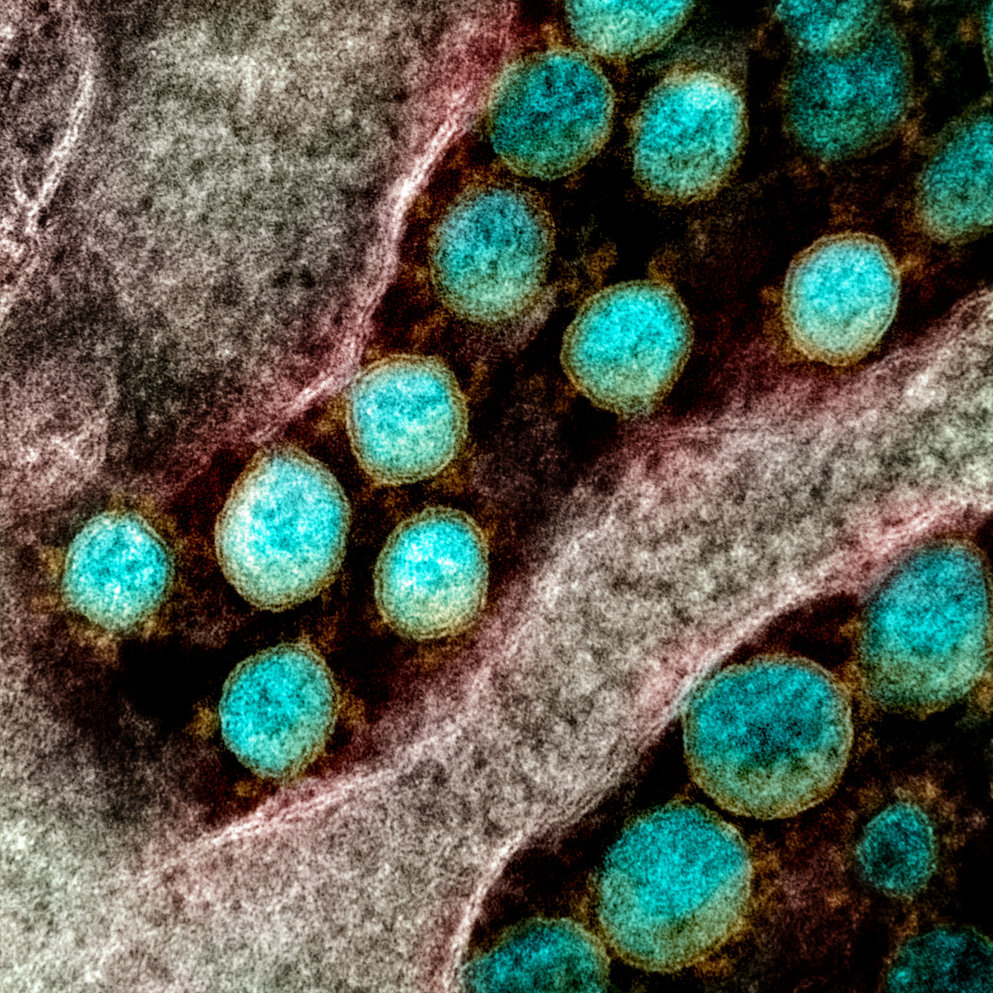
The large majority of ailments that we commonly think of as diseases or
illnesses are considered infectious diseases, like influenza, AIDS and chickenpox. The development of vaccinations continues to be a major priority in
research and clinical medicine. There are a large number of diseases that do not have vaccinations that are effective or easily available. New and emerging infectious agents
such as SARS and Avian Flu, as well as resurfacing dormant diseases,
are frequently without effective treatment as well. Bioterrorism threats are also bringing the attention of the medical research
community back to diseases such as anthrax and smallpox.
The La Jolla Institute for Allergy & Immunology research scientists are working to understand how we can better immunize ourselves against infection and how we can better combat infections once we have been exposed. La Jolla Institute for Allergy & Immunology is hosting the national Immune Epitope Database (IEDB). Epitopes are protein fragments that exist on cells and identify them to the immune system. The way the body reads and responds to epitopes is crucial to the body's formation of a response to invading microbes. Working in conjunction with the National Institutes of Health, LIAI will be providing this extensive database of knowledge to the entire world, helping to improve our chances of conquering infectious diseases.
BREAKTHROUGHS
Finding Provides Knowledge Critical to Developing First-Ever Dengue Vaccine
La Jolla Institute research has validated the long-held and controversial
hypothesis that antibodies - usually the "good guys" in the body's
fight against viruses - instead contribute to severe dengue
virus-induced disease. The finding has major implications for the
development of a first-ever vaccine against dengue virus, a growing
public health threat which annually infects 50 to 100 million people
worldwide, causing a half million cases of the severest form. Sujan Shresta, Ph.D, led the research team.
Gene Discovery That Triggers Disease-Fighting Antibodies
A
research team led by the La Jolla Institute for Allergy & Immunology has
identified the specific gene which triggers the body to produce
disease-fighting antibodies -- a seminal finding that clarifies the exact
molecular steps taken by the body to mount an antibody defense against viruses
and other pathogens. The finding, published online today in the
prestigious journal Science,
has major implications for the development of new and more effective
vaccines. The La Jolla Institute's Shane Crotty, Ph.D., was
the lead scientist on the team, which also included researchers from Yale
University.
Key Role in Biodefense
Shane Crotty, Ph.D., a principal investigator at La Jolla Institute for
Allergy & Immunology, identified an antibody that could be the
nation's first line of defense in protecting against a terrorist
smallpox outbreak. Crotty's work is one of several La Jolla Institute
for Allergy & Immunology projects under way that play a key role in
the nation's biodefense efforts.
Natural Killer T-Cells and Lyme Disease
Mitchell Kronenberg, Ph.D., found that a bacteria transmitted by
the tick bite, and which causes Lyme disease, stimulates an immune
attack by the NKT cells - a major discovery considering this is the
first disease-causing microorganism (and only the third substance on
earth) known to naturally activate NKT cells.
Emerging and Infectious Disease
The IEDB is groundbreaking because it contains antibody and T cell epitope data curated from scientific literature, presented collectively to facilitate basic research. The database interface is designed to be intuitive and easily searched, to propel the dissemination of immune epitope information, the generation of new research tools, diagnostic techniques, vaccines and therapeutics for emerging and re-emerging diseases.
RESEARCHERS AND THEIR LABS
Chris Benedict, Ph.D.,
and his laboratory are examining the fashion in which viruses work to
control and shape the way the immune system responds to them.
Specifically, his lab focuses primarily on molecular antiviral
signaling pathways initiated by cytokines of the tumor necrosis factor
(TNF) and interferon (IFN) families. Using both cell culture and in
vivo models, Benedict's lab studies several different viruses including
herpesvirus, influenza and adenovirus.
Shane Crotty, Ph.D., is an expert in viral diseases and his laboratory recently completed a
study showing that individuals vaccinated against smallpox decades ago
are still partially protected from that disease by their immune system.
The goals of Dr. Crotty and his team are to deepen our understanding on
how to prevent infectious diseases with new vaccines and how to develop
effective cures for diseases that are currently without any method of
treatment.
Bjoern Peters, Ph.D. is taking a very close look at allergens(allergic disease causing agents) and how they interact with the human
body. The human body is constantly bombarded with allergens; they are simply everywhere. An immune system functioning properly should meet these allergens with a T-Cell (white blood cell types that aid the immune system) response that downplays the reaction to the allergen. However, it's a bit of a mystery what it is about the allergens and the immune system that allow allergic disease to take hold in certain individuals.
Alessandro Sette, Ph.D., and his laboratory are helping
to navigate through the nearly innumerable amount of epitopes in order
to glean information relating to more effective vaccine creation. Dr.
Sette's focus is in bioterror threats such as the West Nile Virus, SARS
and smallpox.
Sujan Shresta, Ph.D.,
and her laboratory are investigating how the Dengue virus (DENV) and
other mosquito-borne viruses, including the West Nile (WNV), Japanese
(JEV), and St. Louis encephalitis (SLE) viruses cause disease in
humans. They use mouse models to study the viruses' ability to infect
various organs and have identified both viral and host factors that can
increase the chances a DENV infection will lead to serious diseases,
such as dengue hemorrhagic fever and dengue shock syndrome. Knowledge
gained from these studies is key to developing rational treatments and
vaccines against these viruses.
Carl F. Ware, Ph.D. and his laboratory are investigating the mechanisms of how viruses
evade the immune system and cause persistent infections. Dr. Ware's
research team is studying several persistent viruses, like adenovirus, herpesvirus
and hepatitis virus, which may lead to autoimmune diseases or recur
during cancer. His laboratory has discovered new methods to enhance and
restore immune function that may counteract the evasion mechanisms of
these persistent viruses.